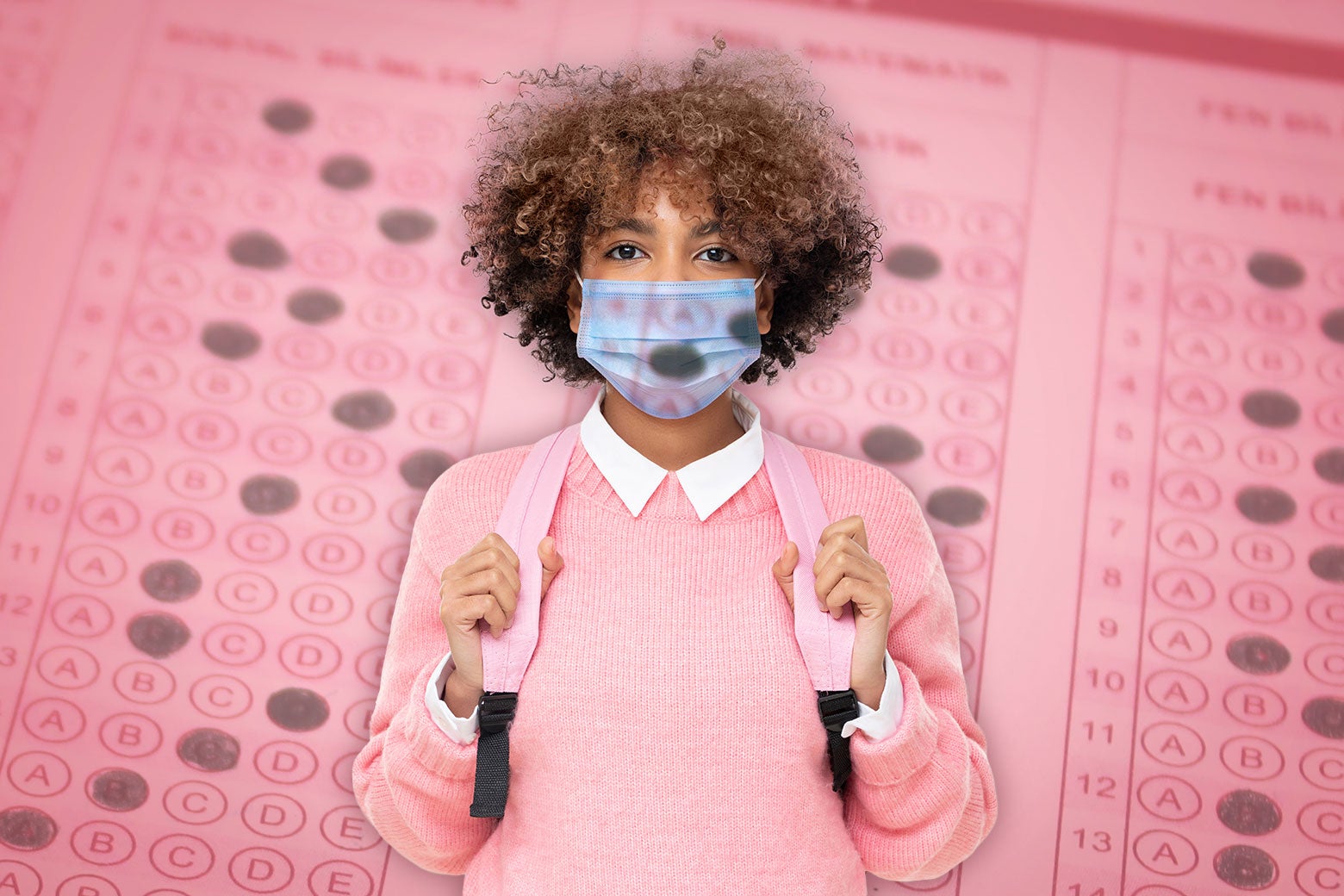
Founded in 1764, and with a current undergraduate acceptance rate of less than 6 percent, Brown University is one of the most prestigious colleges in America. It is also home to a raging academic scandal. Roberto Serrano, a professor of economics for 34 years, had to make a decision at the start of the spring 2026 semester. Just weeks before, a masked man had opened fire during a final exam review session, killing two students and injuring nine others. Students would soon return to classes, but the campus was tense.
To “help students deal with exam anxiety,” Serrano switched to take-home midterm and final exams. Following that announcement, more students than ever before enrolled in the course—86, a number far exceeding the previous high of 30—and their performance on the midterm was stellar. The average class grade was a 96. Serrano suspected that students had used A.I. to complete the exam but hesitated to respond punitively without absolute evidence. He switched to an in-class exam for the final and told students that if their performance was similar to that of the previous test, he would count the midterm. Otherwise, “I would declare the midterm void and reweight the final.”
Students tanked the final. The average score was 48.6, easily the lowest ever in the course.
A month later, the SAT turned 100 years old, reigniting a contentious debate about standardized testing. In recent years, colleges across the country (including, for a time, Brown) have suspended their consideration of standardized tests in application decisions. At the University of California, the final vote to remove standardized testing from admissions consideration was cast by the board of regents on May 21, 2020—an understandably harried time, as state colleges had been closed since March 10 of that term because of COVID-19. As a result, admitted UC students performed at a far lower level than expected, with faculty members noting that they “must reteach middle-school mathematics” and instruct students on “foundational literacy.” At the same time, COVID-era students of all ages became used to extended or nonexistent deadlines, unsecured assessments, assignment exemptions, and inflated grades. Colleges now have to reckon with the aftereffects of the COVID era—including well-meaning academic modifications that have become the new normal. To make matters worse, educators are muddling through recently established A.I. policies and unfettered student usage of the technology.
The testing debate is about to converge with these on-campus realities. Already hampered with budgets cuts and bloated class sizes, professors will now regularly be tasked with remedial instruction in all subject areas, not merely in unique situations. Without standardized testing as a reasonable barometer of student skill, colleges will be flooded with students of unknown abilities. American higher education might not be able to withstand such a crisis.
Who could have predicted such an educational mess?
Probably every classroom teacher you know.
I have taught public school English for the past 22 years. I’ve sent students to Brown, and to Princeton, Yale, Dartmouth, NYU, MIT, Columbia, and more—all cauldrons of academic pressure. Yet American education was shaken by COVID. First, by the reasonable need for largely virtual classrooms and the requisite confusion they can entail. Afterward, the necessary pandemic modifications became the norm. Students became accustomed to teachers at all levels treating deadlines as suggestions rather than requirements. The idea of secure exams felt anachronistic; open-book and extended-time assessments, a necessity during the asynchronous days of the pandemic, were now the expectation. I don’t blame teenagers for having these expectations, but I know that the educational system is failing them by acquiescing.
Then, in November 2022, ChatGPT arrived. At first, I thought it was like most hyped things in life, susceptible to folly and vice. The folly: Some students would likely use A.I. to help them understand difficult texts and to save time on assignments. The vice: Other students could attempt to pass off the tech’s outputs (which have been largely stolen from the copyright works of others) as their own.
I’m sensitive to the academic, social, and personal pressures that my students experience. Perhaps the best way for me to show them that I care is to affirm their dignity. They are worthy of success, however it is defined, and they can achieve far more than they realize. For those reasons, I try to demonstrate the folly and vice of A.I. usage.
Educators across the country have been told that A.I. is inevitable and necessary in the classroom. A.I. helps students, the argument goes—however, the rhetoric is vague or nonexistent. As with other educational fads, this technology has been thrust upon teachers from the top down so that teachers must do the legwork of integration (and students become unwitting variables in an educational experiment).
When universities paused the usage of standardized testing in their applications, they had reasonable intentions: to address historical inequities in college admissions. We should always be looking for ways to expand equity and lessen systemic exclusions, but we should not achieve these goals at the expense of rigor and integrity—for in doing so, we demean the same people whom we purport to help.
In a similar vein, tech companies promise that A.I. will save students time, eliminate unnecessary assignments, and produce instant (and personalized) feedback. Such a vision of education is unrealistic and, frankly, inhuman. Although it might sound quaint, school is for learning, which is a complex, individual process full of discovery and failure. A.I. produces outcomes, but actual learning happens when students are engaged in processes: the research and thinking that occurs during the planning and drafting of an essay; the steps involved in mathematical and scientific equations; and experiential learning, in which students make claims and hypotheses, then test them through building, designing, and creating.
For my entire time in the classroom, I have taught AP English courses. My approach is simple. I want my students to understand how language works. I rarely assign homework. Most of our work is done together, in a closed-door classroom in the middle of our school, on the page: annotating the opening scene of Don DeLillo’s White Noise, comprehending the route of James Baldwin’s argument in “On Black English” or Susan Sontag’s “A Woman’s Beauty.” All language is a stay against confusion, an attempt to articulate the ineffable. Through close reading (with an especial focus on syntax, the ligature of language) and discussion, we try to figure out how writers structure their narratives.
Because our work arises from the ground level, students begin to grasp how the music of language enables its meaning. They gain confidence. They realize that their eccentric, natural observations are more refreshing than A.I. (It doesn’t hurt that we read Thomas Pynchon’s “Is It O.K. to Be a Luddite?,” which shows them that sometimes it is necessary to rage against the machine.) My students exceed the state and national averages each year on the AP exam because they learn how language works—and how it can work for them.
Brown’s scandal resonates because the college is prestigious, and such students, the thinking goes, should have the acumen to pass an undergraduate economics exam. But similar incidents are legion. A history professor in Texas regularly catches A.I.-generated or -assisted papers by inserting hidden text into directions. (The trend has become common, with students at the University of Oklahoma, Santa Clara, and Cal State–Chico having experienced the “Trojan horse” method.)
In an attempt to maintain some modicum of prestige, let alone integrity, colleges are scrambling. Starting with the fall 2026 term, the University of Chicago’s law school “will pilot the general prohibition of electronic devices from all core 1L classes, with some limited exceptions.” Professor William Hubbard notes that A.I.’s ability to save time and effort “could be very beneficial in the professional context where you want to maximize efficiency. But they are very, very damaging in the educational context, when the whole point is to do things the hard way—because that’s how you learn.” Administrators at UC–Berkeley’s law school also announced a change to the institution’s A.I. policy: “The current state of the technology requires that AI use be coupled with the cognitive skills necessary to strategically deploy the technology, to critically assess its work product, and to uphold ethical obligations to clients and to the legal system.” Therefore, students are forbidden from using A.I. to brainstorm a topic or thesis, propose organizational structure, or compose or edit text, as well as “for any purpose in any exam situation.”
And it’s only going to get worse. By removing standardized testing from the admissions process, colleges have put themselves in a bind. High school grading standards are so atomized as to render comparisons between schools nearly impossible. College administrators are also realizing that by pushing A.I. integration without sufficient input from faculty, they’ve created diplomas of tenuous worth. The only way forward is to recognize that we need a more skeptical approach toward A.I. in education, along with a return to standardized testing as one of the ways that we assess learning and applicants.
During this upcoming academic year, the students who were freshmen in high school during the nascent time of ChatGPT will apply to college. For many of them, A.I. has gone from novelty to necessity. Rightly so, they will soon need to demonstrate their abilities against established standards, on tests and in classrooms. They—and we—are in for a rude academic awakening.